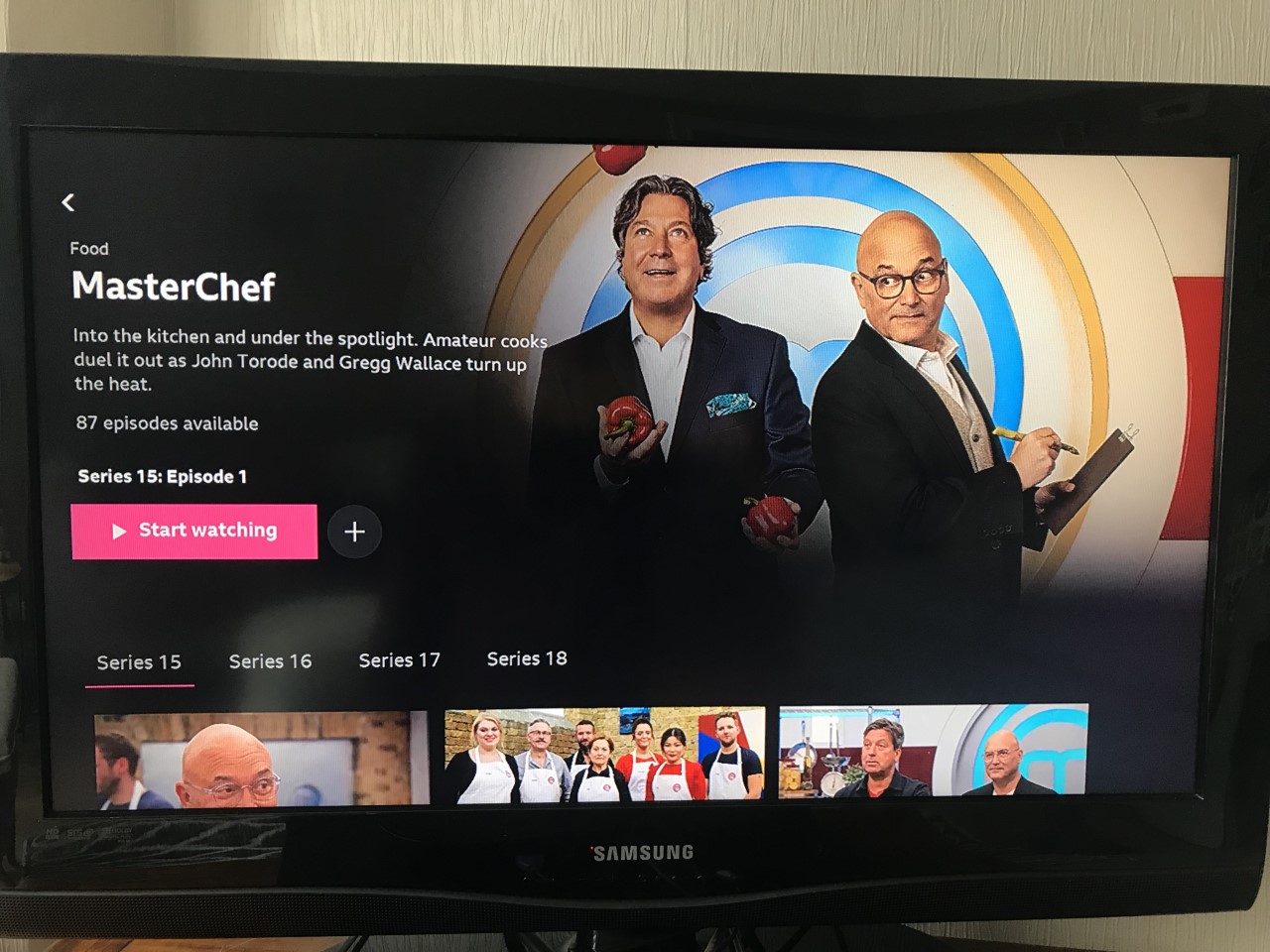
The best thing about MasterChef is the crying.
Contestants cry when they get through a round and they cry when they don’t. They cry when they make a dish in tribute to loved ones. John Torode was moved to tears by the sheer perfection of a lamb dish. Gregg Wallace welled up when a dessert reminded him of sweets his granddad used to give him fifty years ago.
But the best cry was in the last series of Celebrity MasterChef, when Melanie from 90s girl band All Saints wept from merely being in the presence of Mary Berry who was guest judging for the first time. That alone was worth the year’s license fee.
I started watching MasterChef properly after we had kids, a time of life when your brain is so melted that low-stakes, gently reassuring television formats are all you can process in the short slot between their bedtime and your bedtime. But I didn’t realise I was such a fan until the pandemic.
A couple of weeks after the shutdown, I saw a trailer for the new series of MasterChef, and felt a sense of relief out of all proportion to the airing of a TV show about strangers cooking things. Maybe civilisation wasn’t doomed after all. Or maybe it was, and I had something to take my mind off it.
Then, last summer, it all went intergenerational.
We were in a hotel for a few nights, and when you are in a hotel with kids you only have two choices: all of you go to bed early, or all of you go to bed late. Celebrity MasterChef was on, so we thought we might be able to buy the kids’ silence by us all watching it together. Inexplicably, they loved it. Through the autumn and winter, we watched every series that was on the iplayer.
Now the kids know their chocolate fondants from their fondant potatoes. They’re fascinated by John and Gregg, and the contestants’ ages which appear on the screen. They mock-recite the names of the food critics: ‘Grace Dent! William Sitwell! Jimmy Famurewa!’
I have zero interest in fine dining. But like all good entertainment, MasterChef is about people. The role of food in family and heritage. The links between travel, food, and memory. How people react to success and failure. The crying!
Then there’s how pretty much everyone competing in the show is either trying to please their parents, or are turning John and Gregg into proxy dads from whom they are desperate for validation. All terribly entertaining.
MasterChef is also a surprising window into British identity – its nature, contradictions, and promotion. All those loving, dramatic shots of London’s globally-recognisable cityscape. The mass-catering challenges in famous cultural institutions and old imperial buildings. There’s quite a lot of British exceptionalism going on, alongside showcasing the world cultures that are found in the UK, so many from former colonies. I’m not sure how conscious all this is, or if cooking for uniformed sailors on a warship is just good TV.
But at the end of the day, what matters is whether your soufflé rises and your ravioli hold. Hard to understand, but I’m particularly fond of Gregg Wallace. He’s a walking exclamation mark, always talking in CAPITAL LETTERS! But he’s made for this kind of non-taxing TV. When he gets a bit too giddy, John’s face expresses our disapproval.
So ‘MasterChef is back!’, as the narrator always keeps telling us. Tonight. It must be spring.
 David Mitchell
Leave a comment