Britain’s foot had always seemed too like home yet too remote to visit. But we discovered you can fly from Belfast City to Newquay, and the dates worked. Cornwall suffers from ‘overtourism’, including – and I have the zeroes correct here – 350,000 Germans per year.[1] Hopefully they could squeeze us in.
The Premier Inn could, just about. We had to go straight back to reception to list the things that didn’t work in the room, and point out the smell. We were given a smell-reducing machine.[2]
Our car was much nicer, which was good because we saw a lot of it. Hire cars make me nervous. I expect to drive into a wall more or less immediately. But Cornwall, like Ireland, demands a car, and its roads are notorious. Our low point was getting stuck in gridlock going up a steep lane in baking sunshine. We had to get extracted by helicopter, or at least I have a memory of visualizing the helicopter.
But you can get around a lot of places quickly by car – in case you need cars explained to you. Truro, Falmouth, St Ives, St Michael’s Mount, Porthcurno beach, Land’s End, Wadebridge, Padstow, and Perranporth beach – we hit all of these in our 96 hours. Newquay was inaccessible due to the huge Boardmasters festival.
St Ives was a highlight. It’s so popular there’s a park-and-ride train which off-loads hundreds of tourists every half hour to clog the streets and harbour which still manage to be delightful despite us all shuffling around looking at them. Like Portrush, the town sits on a peninsula and is surrounded by beaches, with a headland walk at the tip. That might be where the comparison with Portrush ends.
St Ives also has a Tate art gallery, so you can have the unusual experience of urban sophistication followed by a paddle in the turquoise Atlantic. It’s great when galleries and museums understand that they are so boring that they need to go all out to amuse kids. Children get in free, and upstairs is a great space where they can do crafty stuff and work on a free artsy workbook.
Watch out for the scones in the café, though, which cost seven pounds each. I nearly died, and then nearly died again when Wife admitted she’d known this before we ordered three of them. That was our lunch for the day, and the next day.

Another thing that guidebooks rave about is the Camel Trail, a walking and cycle path that follows the Camel River to the harbour town of Padstow. We hired bikes in Wadebridge to do the five-mile, level trip towards the sea.
It’s always good to be on a bicycle, but I kept making quips like, ‘Isn’t that Derry over there?’ and ‘Next stop, Dundonald!’ – my point being that it’s just a greenway and perhaps only spectacular to someone from a country that doesn’t have trees and paths. I counted at least five bike hire companies that apparently survive on this, well, pedestrian, route.
So why not on the Comber and Connswater greenways in Belfast, or (my dream) if there was a safe cycle lane from Titanic Quarter to Holywood? It seems all a route needs are the right branding and publicity, and us idiotic tourists will show up – even, as we did, in the rain.
The path ends amid unwelcoming car parks in Padstow, where you merge with the crowds and browse extortionate Rick Stein merch and perhaps eat in his restaurants. I’m a boat trip nut, so we booked a ninety-minute cruise on the Jubilee Queen out of the Camel Estuary and along the coast. It was grey and choppy, but the coastline – similar to but perhaps not quite as varied as the Causeway Coast – still looked great, and we saw seals.
So Cornwall has beautiful landscapes, pleasant towns, and so much to see and do, but we left with a feeling that it’s more than the sum of its parts. There’s just an appealing atmosphere. The surfers, maybe. Or the barmy placenames. Would Methodism do that? I noticed a surprising number of Methodist churches.[3]
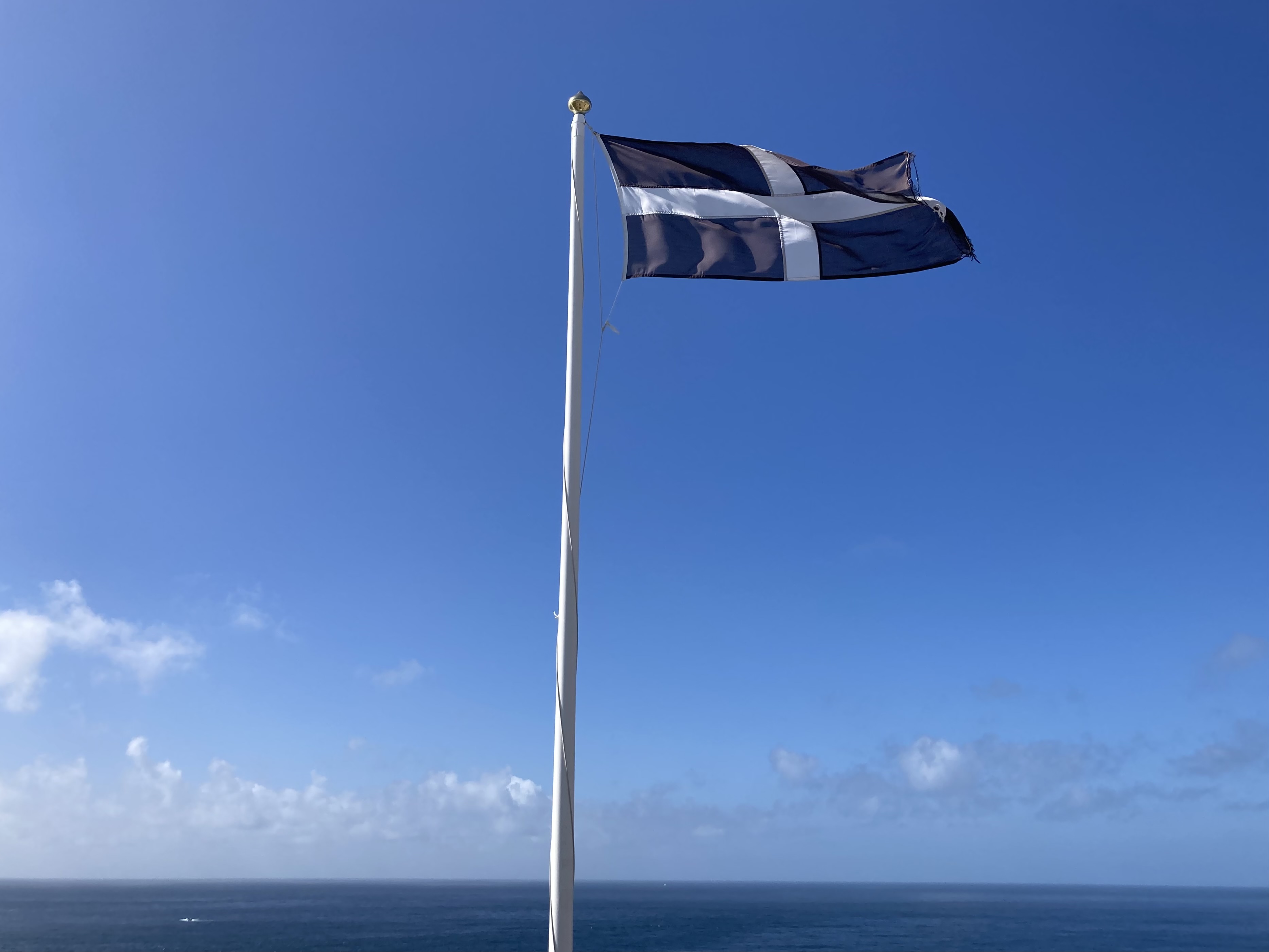
Or I wonder is it to do with the Cornish flag that flew in so many places. I didn’t know there was a Cornish flag, and don’t really know what it stands for since I had no money left after the scones to buy a book on Cornwall’s history and Celtic heritage.
But I like regional identities. They are more connected to reality than national ones. Maybe the flag just makes you think this place is independent of the stresses of elsewhere.
Then there’s the major local product, Cornish cream, and who doesn’t like cream? Vegans, I guess, but who else? The dairy intolerant, fine. But who else? It’s used to make the fudge and ice cream on sale everywhere, both of which I was high on for most of the trip.
Also, the Cornish accent is terrific, and a solid reason (if you need one) to talk to your travelling companions in a pirate voice.

My final theory about the laid-back vibe is that it’s down to near-universal dog-friendliness. The shops and cafes were practically begging you to bring in your dog. One place had a lovely sign about understanding that dog ‘accidents’ can happen and just asking you to report it to staff. A country pub we ate in had a kind of dog station which had a huge jar of dog treats, water on tap, and water bowls. Lots of cyclists on the Camel Trail had also hired little trailers that adorably carried their dogs.
Compare this with (again) the north coast of Ireland, where hardly anywhere is dog friendly, even though there are lots of dog walkers. And the atmosphere can be a little austere and uptight. Funny. I hadn’t connected those things until just now.
Whatever it is that Cornwall has, we hope to be back for more.
But shiver me timbers! Not to that blasted Premier Inn! It can walk the plank.
[1] They come because, surprisingly, a German TV drama is filmed there.
[2] The staff were friendly and sympathetic and got us a slightly better room the second night.
[3] It wasn’t my imagination. I looked it up – Methodism took off among the Cornish mining communities back in the day.
 David Mitchell
Leave a comment