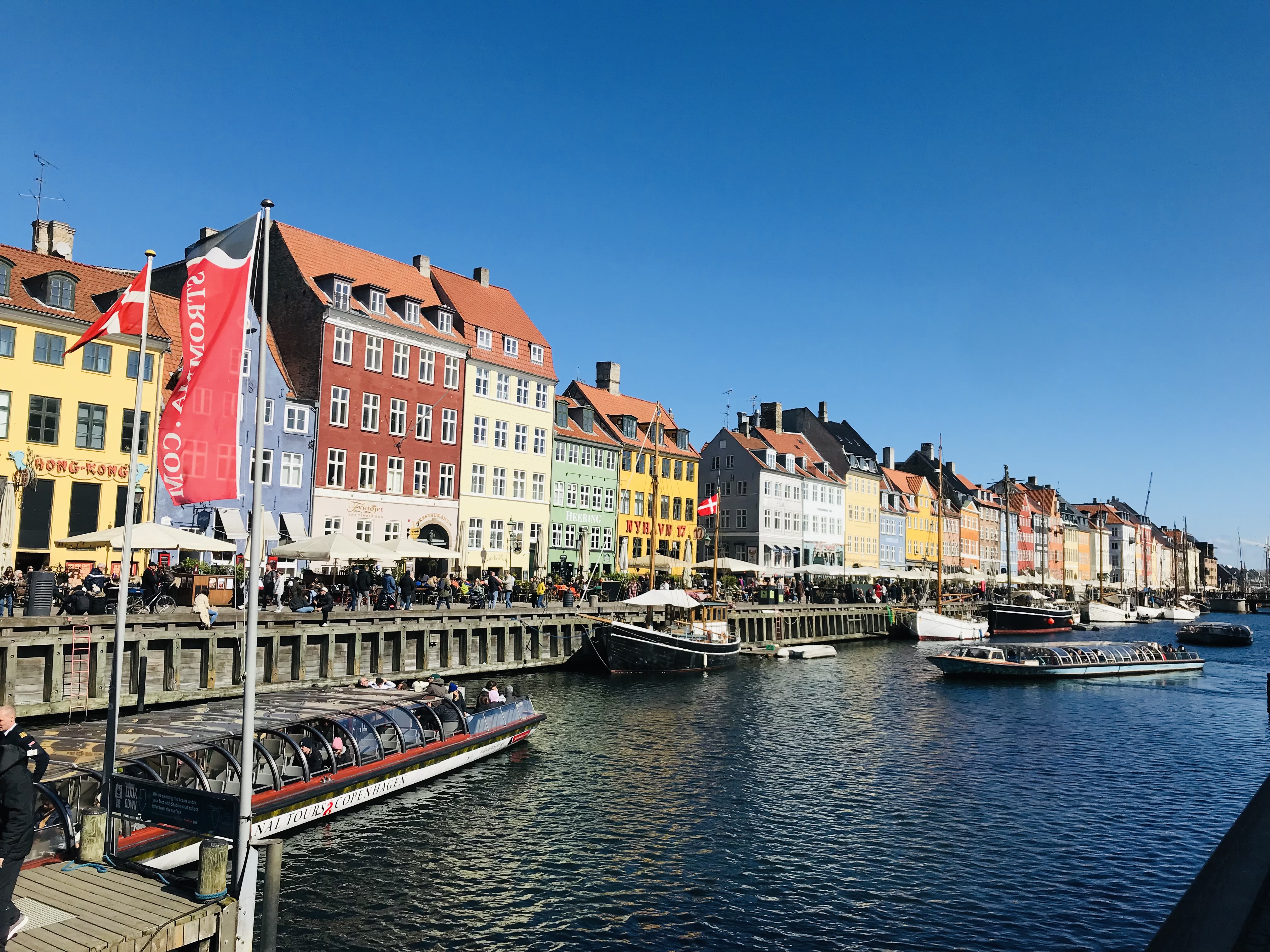
In Copenhagen a couple of years ago I discovered a street that had our name on it.
Mitchellsgade.
There it was, written on the bustop. Wow. Maybe an ancestor of mine was honoured in the ‘world’s most liveable’, and my new favourite, city.
I know a Dane so I emailed him. Bjarne, why do you have this street with such an unDanish name?
He replied with a link to an entry in an online encyclopaedia. Mitchell Street was named after William Mitchell, the son of Scottish industrialist from Kilmarnock in Ayrshire who founded a hosiery factory in the city in 1780s.
Sadly, no Ulster connection then, and speaking of tenuous links…
Last night I went to Lessons from the Nordics at the Imagine Festival, an event organised by Collaboration for Change. In QFT, we watched a one-hour documentary, Denmark: The State of Happiness followed by a panel discussion with the filmmaker, Lesley Riddoch, and local thinkers Claire Mitchell and Fearghal Mac Bhloscaidh.
Riddoch is a prominent campaigner for Scottish independence, and was, I confess, new to me. Her mission is to show Scots how the Nordic countries offer a model for an independent Scotland. Could Ireland also learn?
As ‘avid readers of this blog’ will know, I am fully signed up to all of this kind of thing, and I thought this event might be familiar territory. But my notetaking couldn’t keep up.
This was about much more than cycling and social welfare. Hygge was barely mentioned. Denmark and its neighbours have countless novel (to us) approaches to housing, education, energy, and agriculture. A big theme was local government – the Nordic countries seem have much smaller local councils with much greater powers than Ireland and the UK. And how about ‘district heating’ – instead of every house having a boiler that needs maintained and then replaced, there’s one boiler for many houses.
In the discussion, Riddoch said she was struck by a phrase used by some of her Danish interviewees, one which sums up the difference with the UK: we decided to… We decided to end reliance on foreign energy. We decided to tax cars and fossil fuels until it hurts. We decided to clean up the water in Copenhagen.
It’s hard, said Riddoch, to think of any instance of permanent transformation in the UK about which we could use a similar statement of collective decision and action.
Part of the explanation is Denmark’s proportional political system and coalition governments. Schools instil civic duty and consensus-seeking. In my reading about the Nordic countries, and even occasionally in Riddoch’s film, the happy and uniform collectivism can seem a little cultish. Critics say the egalitarianism stifles ambition.
But Riddoch pointed out that some of the biggest companies in the world are Danish. And what would we prefer: Nordic-style solidarity, or the current hyper competitive Anglo-Americanism which blithely leaves much of society behind?
Mitchell and MacBhoshcaigh delivered high-IQ analyses of why Ireland’s labour, land, and political history had not produced a social democracy like Denmark’s. Now we have a divided and dysfunctional state in the north and an unequal, America-dependent neo-liberal state in the south.
But they also pointed to the strong civil society, the natural resources, and the creative and entrepreneurial ingenuity that could become the basis for our own ‘Nordic’ path. As ever, you don’t import models, you take inspiration from them and then work with what you have.
I went home fizzing with ideas. There’s a lot to learn from Denmark. Where else would you want to have a street named after you?
You can watch Lesley Riddoch’s films about Denmark and other Nordic countries here.
 David Mitchell
Leave a comment