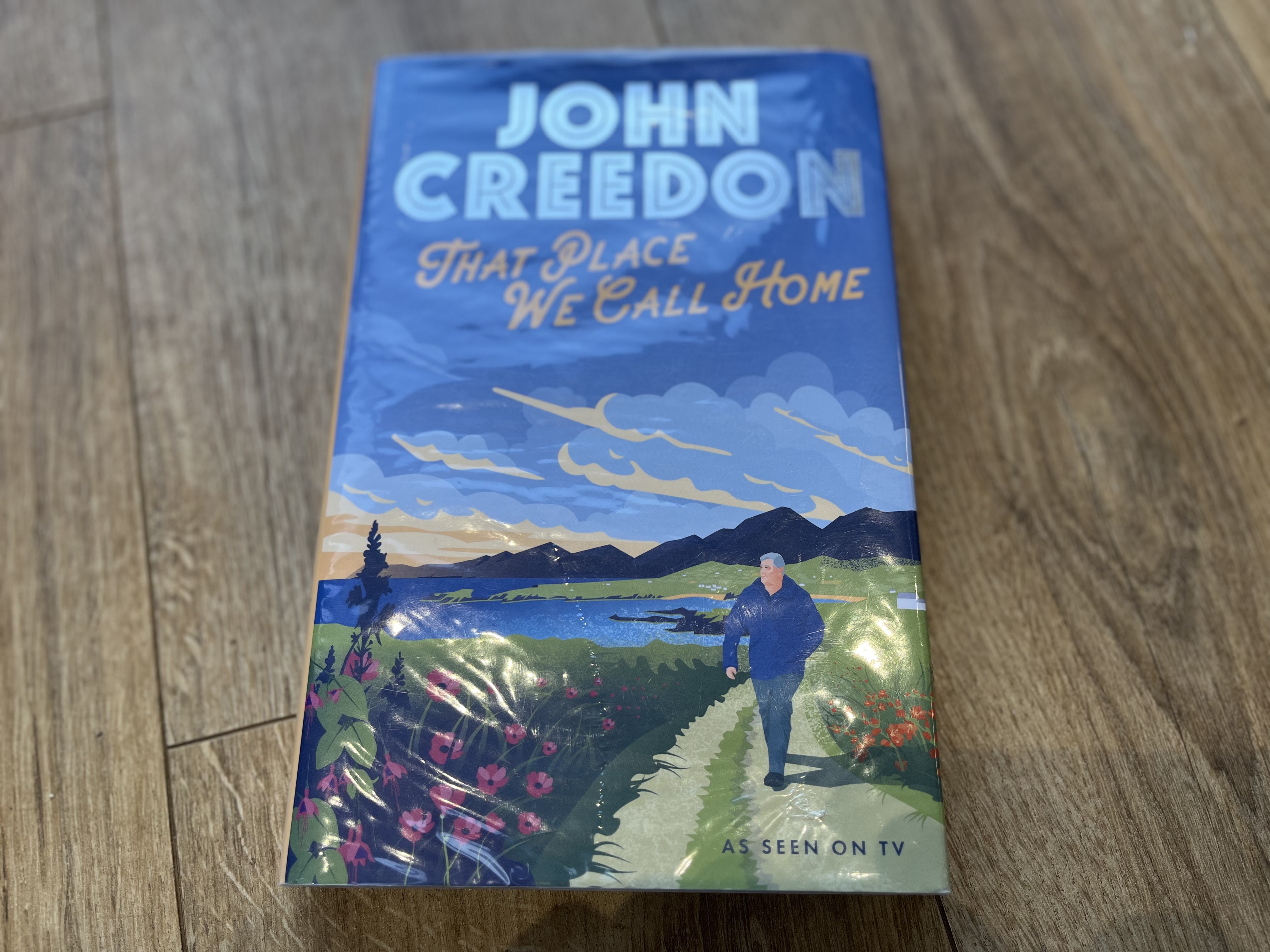
This book has been out a few years; I found it in my local library. Creedon, the RTÉ broadcaster, gives us a folksy and cheerful work on a topic which is actually massively controversial, as we know from the recent furore over the name of Herzog Park in Dublin and the ongoing push for more Irish language signage in the North. Placenames are controversial in any society with a difficult history, which is all of them.
A study of placenames could simply have been a reference book but That Place We Call Home cleverly turns the island’s accumulation of location labels into a narrative, each chapter showing how a new phase of history left behind its placenames: the pagans, the Celts, the Christian saints and monks, the Vikings, the Normans, the English, the Scots, the independence fighters, plus the arrival of peoples like Huguenots, Palatines, Jews. Amid all this are many dictionary-style entries which break down the meaning of selected names. There’s an appendix with a helpful and surprisingly long glossary of common components of Irish placenames, ‘baile’, ‘cill’, ‘lis’ and the rest.
I wrote on this blog before about placenames and here I am again. I assume this means I’m old. Maybe you need to have spent a bit of time in places – accumulating memories and contrasting experiences – to have any curiosity about what a place’s name means. That Place We Call Home is stuffed with intriguing detail on the names of everywhere from the streets of Cork and Dublin to the counties and provinces, to the island itself.
Still, reading this book I often found myself wondering, who cares? Is it really such a revelation that, say, the name of a village by a big hill means ‘big hill’ or the name of some townland in the back-of-beyond commemorates St. Billybob having his cornflakes there, or whatever? It doesn’t tell me who I am or where I’m going. Does it change how I feel about individual places?
Well Creedon certainly believes that decoding placenames can give us a closer connection with place: ‘By drilling down into our logainmneacha, we release myths and legends, fairies, ancestors, and above all else, a love of place.’ He tells us about a spot near his father’s home in West Cork, the River Allow, in Irish, Abhainn Ealla, meaning the ‘river of the swans’. ‘To this very day,’ he writes, ‘you will find swans there, and I still marvel at the idea that the ancestors of these swans we see in Abhainn Ealla today were paddling through that same water centuries ago.’
Alright that is pretty interesting. But whatever about individual placenames, what a great way to explore history. Placenames are artefacts, the whole named landscape a museum. As for the difficult history, Creedon doesn’t avoid the atrocities carried out on the people in Ireland. But placenames also show how so much of what has made Ireland what it is today arrived from beyond its shores. As a general rule he’s not in favour of changing placenames – they tell us things we need to know about history.
And the collection needn’t be complete. In a nice reflection at the end of the book, Creedon asks why the Brazilians or Poles or Nigerians who have come in recent decades shouldn’t also leave their mark in placenames. Everyone with any interest in Ireland should read this book.
 David Mitchell
Leave a comment