The other week, BBC NI’s The View programme had a long panel discussion about whether those who live either side of the Irish border really know much about each other’s daily lives. They don’t, was mostly the consensus. It’s a fascinating and common debate, which obviously now takes place in the context of possible Irish unity. Do we need to get to know each other better first?
But something huge was unanswered in this and similar discussions: why there is such a gap of understanding between the north and the south. The tone of these debates can be a little philosophical and vague, as if the island is supposedly fractured by a deep, ancient, and slightly mysterious cultural difference which requires an almost poetic sensitivity to apprehend. Maybe it’s the legacy of this, or that, or the other thing.
But the real answers are mundane and straightforward. It’s because there are (a) separate education systems and (b) separate media.
Naturally, much of what people learn at school north and south is the same, although compulsory Irish language in the south is a big contrast. But more important are the differing educational milestones and rituals (examinations, competitions) in each jurisdiction which give a common sense of early experience. They become objects of nostalgia or loathing for the rest of people’s lives. They can never really be grasped by anyone who didn’t go through them.
The media is the main source of national feeling in any country, whether it’s the sporting fixtures prioritised in the news, the accents heard in dramas and talk shows, or the map used in the weather forecast. Even online information still usually has a national inflection. Think of the Late Late Toy Show, a colossal Irish institution which many northerners have never heard of.
When I moved from the north to the south in the late 1980s, both the education system and media were shocks. There was a strange new language at school – and not just the Gaeilge. I’d been in primary school, now I was in national school. I had been in P2, now I was in First Class. I was learning southern rivers, drawing local Bronze Age structures, and institutionalised in a whole new system.
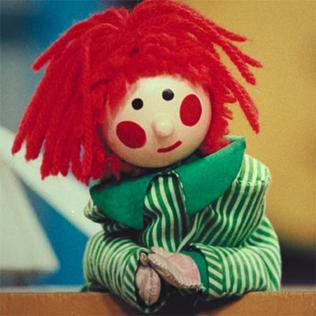
Meanwhile, instead of the addictive Blue Peter and Going Live on BBC, there was weird little Bosco (pictured) on RTÉ, the show about a hand puppet which had special effects which even I at that age could tell were low budget. (Clearly Irish broadcasting has come on a lot, but interestingly, they still show lots of British programmes – a compliment not reciprocated).
What does this mean for Irish unity?
Those who want Irish unity argue that there’s no need to wait until there’s a sense of all-Ireland unity to have a united Ireland. Unity itself will create a national community. They’re right. States create nations, probably more than nations create states. Regional differences will persist anyway.
But there’s still a chicken and egg conundrum in that without more alignment in education and the media, northerners and southerners will still struggle to understand each other or imagine Irish unity – something that all those two-nights-with-breakfast-and-one-dinner hotel deals that draw people across the border will not overcome. And I’d guess that the thought of leaving the large and stimulating UK media landscape for the unknown and much smaller Irish media scene might be one reason many people in the north are hesitant about Irish unity.
There’s a nice observation in the Belfast novelist Glenn Patterson’s book about the prospect of a united Ireland in which he says he always forgets to remember to watch RTÉ. He likes the idea of it – to get to know the south better – but rarely gets around to it. While most of us can watch any media (the sport geoblocking issue aside), you actually have to be quite intentional about following what’s going on ‘down’ (or ‘up’) there. This is probably truer now that everyone streams, rather than ‘flicks’ and watches what’s on.
Of course, there are historic cultural, economic, and religious differences. ‘The Troubles’ are a factor. But it’s education and media that shape the north-south difference on a day-to-day basis. So if you’re interested in Irish unity, or just better all-island understanding, that’s where to start.
 David Mitchell
Leave a comment